


Quick Answer
Learning how to cool a glass sunroom in coastal humidity comes down to airflow, shade, and moisture control. Open the double roller windows on both sides for cross-ventilation, add solar shades to block direct sun, run a fan or dehumidifier, and time your ventilation for cooler mornings and evenings.
Along the Delaware and Maryland shorelines, a glass sunroom is where mornings start and evenings wind down. But when July humidity rolls in off the bay, that same bright, breezy space can turn into a greenhouse by noon. The good news is that a few smart habits keep it comfortable all season. At Patio Systems, we build these rooms for our neighbors in Lewes, Rehoboth Beach, and Bethany Beach, so we understand exactly how the coastal climate behaves. Below, we walk through the airflow, shade, and moisture steps that make the difference between a room you avoid and one you actually live in.
Table of Contents
Why Cooling a Coastal Sunroom Takes Strategy
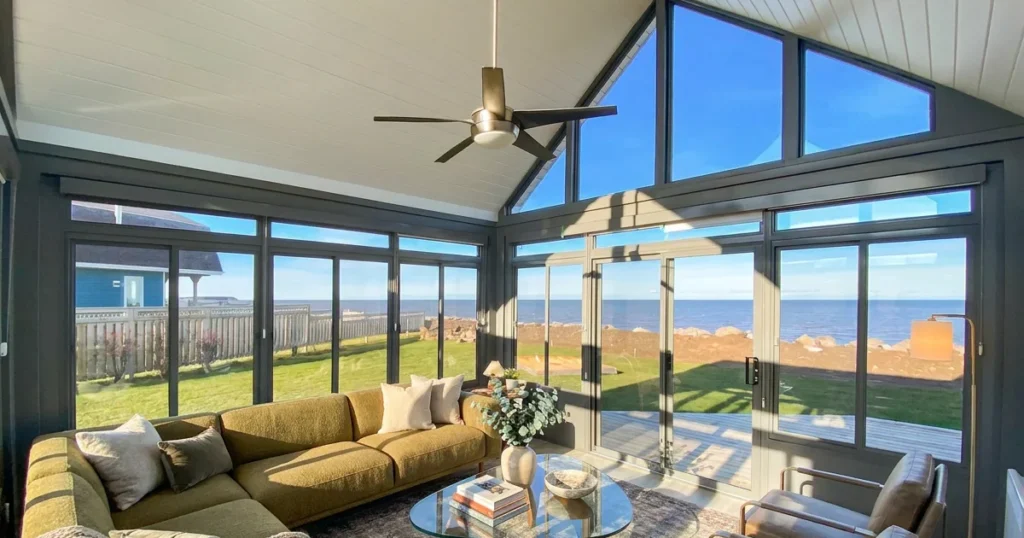
A glass sunroom captures sunlight beautifully, which is exactly why it heats up fast. Our 3-season glass sunroom uses single glazed glass built for three-season comfort, not deep insulation, so the sun’s energy passes straight through and warms the interior. Add coastal humidity and the air feels heavier than the thermometer suggests. Airflow becomes your best friend.
There’s a comfort side and a health side to this. Trapped warm, damp air invites condensation and that musty smell nobody wants. Managing it also keeps the biting greenhead flies and mosquitoes outside where they belong, so your sunset hour stays bug-free. Get the basics right and the room stays usable from May through October.
Step 1: Open Up Your Double Roller Window Ventilation
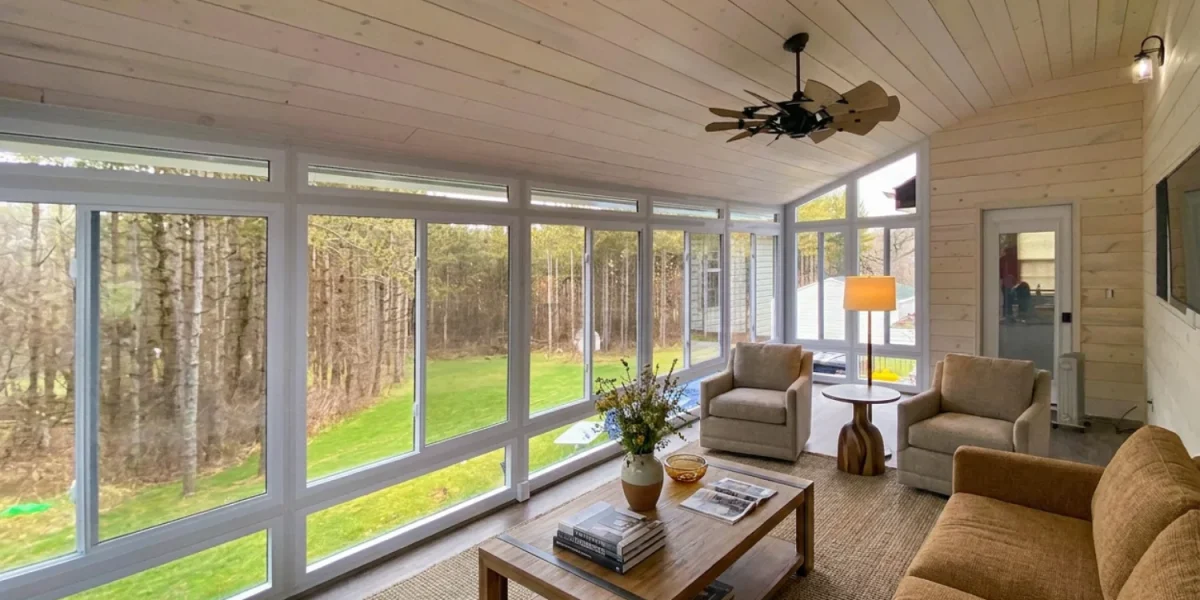
Your room’s biggest cooling tool is already built in. The aluminum framed double roller windows offer ventilation out of both sides with no fixed pane, so both sashes open and air moves through freely. This double roller window ventilation is designed to pull a cross breeze straight across the space rather than trapping it against a wall.
Start early. Open the windows on the shaded, upwind side in the cool morning, then open the opposite side to create a clear path for the breeze. On a calm, muggy afternoon, a simple box or ceiling fan keeps that air moving. These windows are fabricated by Sunspace Sunrooms, the manufacturer behind the system, which is why both sashes glide so smoothly and vent evenly on either side.
Step 2: Block the Sun Before It Turns Into Heat
You can’t cool a room you keep baking. Blocking sunlight before it hits the glass is far more effective than fighting the heat after it arrives. Exterior solar shades filter the harshest rays while keeping your water view, and they’re one of the simplest upgrades we recommend for west-facing rooms.
For a larger footprint, a pergola over the adjoining patio shades the approach and cools the surrounding deck, so less radiant heat reaches the enclosure. Even a well-placed awning cuts afternoon glare. The goal is layered shade that works with your room’s orientation and the low, late-day coastal sun.
Step 3: How to Cool a Glass Sunroom When Humidity Peaks
When the dew point climbs and still air settles in, ventilation alone won’t cut it. This is the point where knowing how to cool a glass sunroom really pays off: pair moving air with active cooling. A portable AC unit or a mini-split sized for the space drops both temperature and humidity quickly.
Run a fan alongside any cooling unit to spread the relief evenly. Close the windows once the cool air is flowing, so you aren’t conditioning the outdoors. On the mildest days, you may only need the fan and open sashes. Match the effort to the weather and you’ll stay comfortable without overworking any equipment.
Step 4: Managing Humidity in a Delaware Sunroom
Managing humidity in a Delaware sunroom is a season-long habit, not a one-time fix. A compact dehumidifier is the workhorse here, especially during those sticky stretches when the air feels heavy even in the shade. Empty it regularly, or run a drain line, and the whole room feels fresher.
Watch for condensation on the glass in the early morning, a sign moisture built up overnight. Wipe it down, improve overnight airflow, and keep soft furnishings from trapping damp. A quick wipe of the aluminum frames prevents residue and keeps the virtually maintenance-free exterior looking sharp.
Common Mistakes to Avoid
The most common error we see is treating a three-season room like an insulated sunroom and expecting it to hold conditioned air all day. It won’t, and that’s by design. Work with the airflow, not against it, and lean on shade during the hottest hours.
Another mistake is opening only one side. Because both sashes operate with no fixed pane, using a single window kills the cross breeze. A third slip-up is forgetting bug protection. If you love the open-air feel, a screen room or added screening keeps the greenhead flies out at dusk. Ventilation and bug-free living are not a trade-off.
FAQ
Can a 3-season glass sunroom stay cool without air conditioning?
In many cases, yes. On breezy or mild coastal days, opening both sashes for cross-ventilation and running a fan keeps the room comfortable. When the humidity spikes in mid-summer, we recommend adding a portable unit or mini-split to take the edge off. Shade plays a big role too, so pair it with solar shades for the best result.
What’s the best way to reduce humidity in my sunroom?
A compact dehumidifier is the most reliable tool for managing humidity in a Delaware sunroom. Run it during muggy stretches, empty the reservoir regularly, and keep overnight airflow moving to limit morning condensation on the glass. Wiping down the frames and glass in the early morning also helps stop moisture and any musty smell from settling in.
Do the windows really open on both sides?
They do. Our aluminum framed windows use a double roller design with no fixed pane, so both sashes operate and you get ventilation out of both sides. That means you can position airflow to follow the prevailing breeze off the bay, which makes a real difference on humid afternoons when every bit of moving air counts.
Which shade option cools a room best?
It depends on your room’s orientation. Exterior solar shades work beautifully on rooms that catch harsh, direct afternoon light, while a pergola or awning over the adjoining patio cools the surrounding deck before heat reaches the glass. In most cases we suggest layering these solutions so the space stays comfortable through the hottest part of the day.
Conclusion
Knowing how to cool a glass sunroom through coastal summer is really about working with the room, not against it. Move the air, block the sun before it builds, and stay ahead of the moisture.
Do those three things and your room stays comfortable and bug-free from spring through fall, without fighting the climate every afternoon.
As Sussex County’s Backyard Living Specialist, we’re here to help you plan the shade, ventilation, and cooling setup that fits your space. Reach out to request a quote and experience the difference.